Should we ban social media for under-16s in the UK?

Experts highlight significant risks with using social media among under-16s including mental health issues - anxiety and depression, cyberbullying and exposure to harmful content. Countries like Australia have acted by banning under-16 access to social platforms. With mounting evidence of harm, growing international action and parents as well as youth supporting similar measures, it’s time to seriously consider a ban on social media for under-16s.
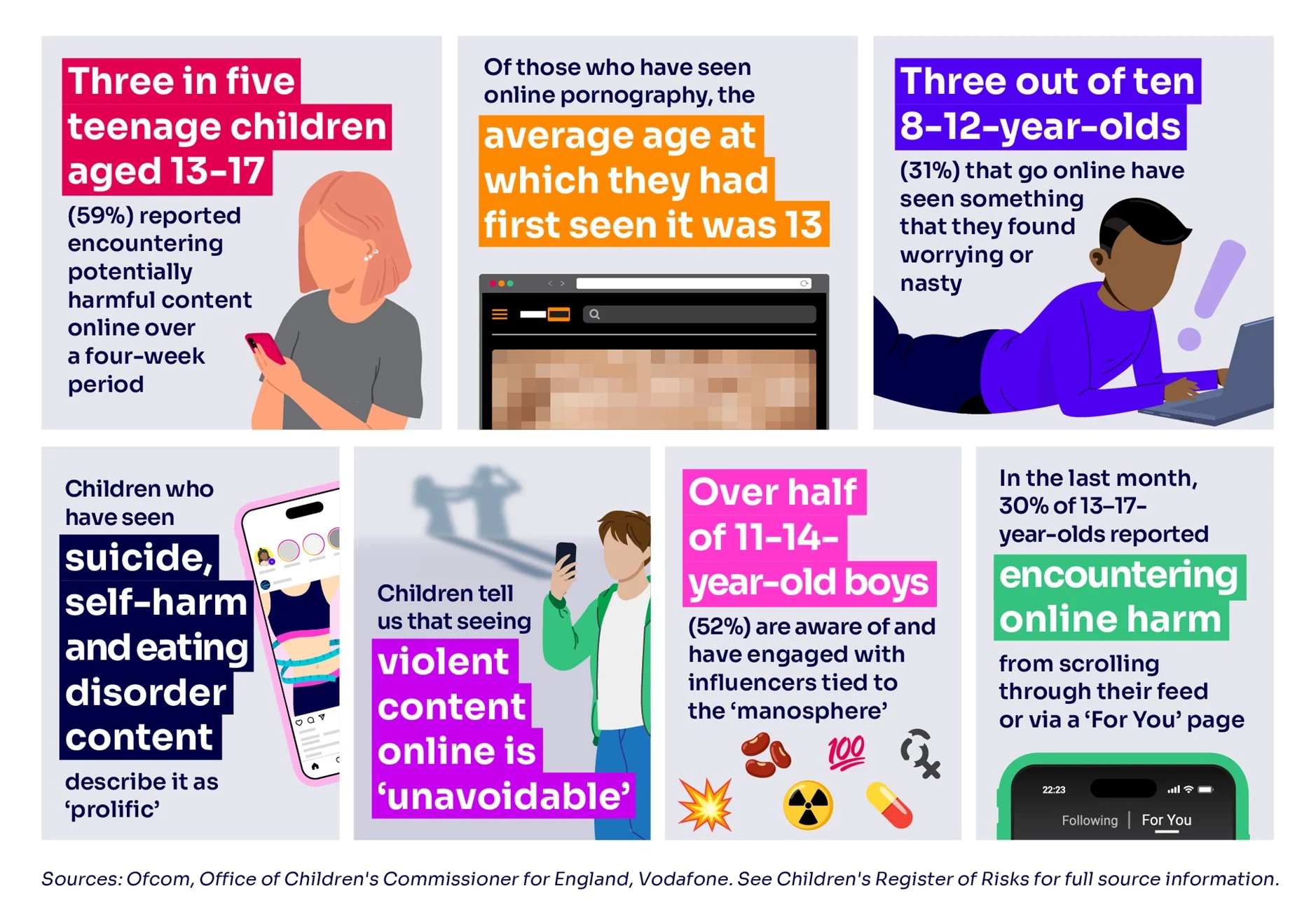 Source for the image: New rules for a safer generation of children online - Ofcom
How Social Media Impacts Children's Mental Health: What the Evidence Shows
Over the past decade, adolescent mental health has reached a crisis point. Anxiety, depression, and self-harm rates have soared, with many experts linking this surge directly to the rise of smartphones and social media.
According to the brilliant and influential book by Jonathan Haidt, The Anxious Generation, the constant notifications, peer pressure, and algorithm-driven content on social media are overwhelming for developing minds. Teens spend hours each day on platforms designed to keep them hooked, often at the expense of sleep, physical activity, and face-to-face relationships.
A major longitudinal study found that adolescents who spend more than three hours a day on social media are twice as likely to experience poor mental health outcomes, including depression and anxiety. In the UK, 27% of children aged 8 – 15 who use social media have experienced cyberbullying, and 40% have seen harmful content such as images of self-harm or suicide. These are not just numbers; they represent real children, some of whom have tragically lost their lives due to online harms.
Australia’s Social Media Ban: A Model for the UK?
Recognising these dangers, Australia recently introduced a pioneering law banning social media accounts for children under 16. Platforms such as Instagram and Facebook must prevent underage sign-ups, facing fines up to AUD $50 million for non-compliance. This proactive move comes after overwhelming evidence that self-regulation by tech companies is not enough and that children are routinely exposed to risks far beyond their maturity.
Similar measures are emerging internationally, with France and Norway setting age limits at 15. The UK is actively debating similar measures. Notably, 70% of children and 90% of parents believe social media platforms should enforce stricter age limits.
Why Are Children Particularly Vulnerable Online?
Children’s brains are still developing, making them highly susceptible to external influences. Their ability to regulate emotion, control impulses and make sound decisions is still maturing. Social media platforms - driven by profits - exploit these vulnerabilities with addictive design features such as infinite scrolling and targeted content and constant notifications, potentially causing addiction, anxiety, and even neurological changes.
UK organisations such as NSPCC and YoungMinds warn that children’s limited digital literacy makes them easy targets for cyberbullying, grooming, privacy breaches, and exposure to harmful content—often without understanding the repercussions. Nearly half of UK children aged 8–17 encounter harmful content, with many unable or unwilling to report incidents.
The Digital Literacy Gap
While some argue that supervised social media use can help build digital literacy, the reality is that most children lack the critical skills needed to navigate these platforms safely. Common Sense Media and other experts warn that digital literacy education alone cannot keep pace with the scale and sophistication of online risks. A ban would give families and schools time to build these crucial skills, preparing them for healthier digital engagement as older teens.
What Do Young People and Parents Think?
A recent poll found that 62% of young people aged 16 - 24 believe that social media does more harm than good, and four in five say they would try to keep their own children off social media for as long as possible. Half of this generation admit they spent too much time on their phones and social media during childhood, often at the expense of real-world experiences.
Allowing a child on social media before they are ready is like handing them car keys before they’ve learned to drive.
Just as you wouldn’t let your child drive unsupervised, we shouldn’t expect them to navigate the digital world alone, especially when the risks are so high.
Practical Steps for Parents to Manage Social Media Risks
In the absence of a social media ban in the UK, here are some recommendations for parents to help buffer the negative consequences of social media use among kids:
Set up rules for social media use and teach about not disclosing personal information online. These may include balancing time spent online with other activities and creating boundaries about acceptable content.
Establish technology-free time such as evenings before bedtime, family meal times, and playdates with friends to encourage in-person interactions.
Model responsible behavior when using social media platforms.
Teach children the benefits of social media and encourage them to make healthy connections online.
Discuss the ways your child could report cyberbullying, online abuse, and exploitation. If your child encounters any of these situations, provide support without judgment.
Conclusion: Time for a Safer Childhood
Social media brings opportunities, but the risks for under-16s far outweigh the positives. With overwhelming evidence of harm, the support of parents and young people, and real-world examples like Australia’s ban, it’s time to put children’s wellbeing first. A ban on social media for under-16s would give our children the space to grow, develop, and build the resilience they need-before facing the challenges of the online world.
Joysy John
Joysy is an entrepreneur, edtech advisor and innovation consultant. Joysy is the ex-Director of Education at Nesta and ex-CIO of Ada National College for Digital Skills. She was awarded an MBE for services to the technology sector and nominated as Top 100 Most Influential BAME leaders in UK Tech.